Initiatives
Our Child Care Work
We Engage in a Number of Projects that Help Our Advocates Reimagine Child Care in Alabama
Child Care Affordability Calculator
In Alabama, the high cost of raising children significantly impacts families’ ability to afford child care. A family’s capacity to pay for licensed child care depends on their income after covering essential monthly expenses.
To assist in understanding these financial challenges, a family calculator is available, allowing users to select their county and, based on median income, determine access to the licensed child care market. This tool serves as a policy resource to highlight the difficulties families face in accessing child care subsidies.
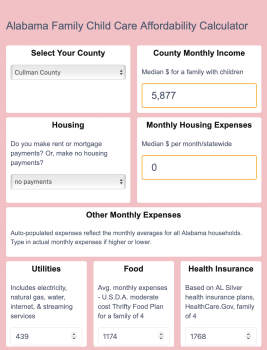
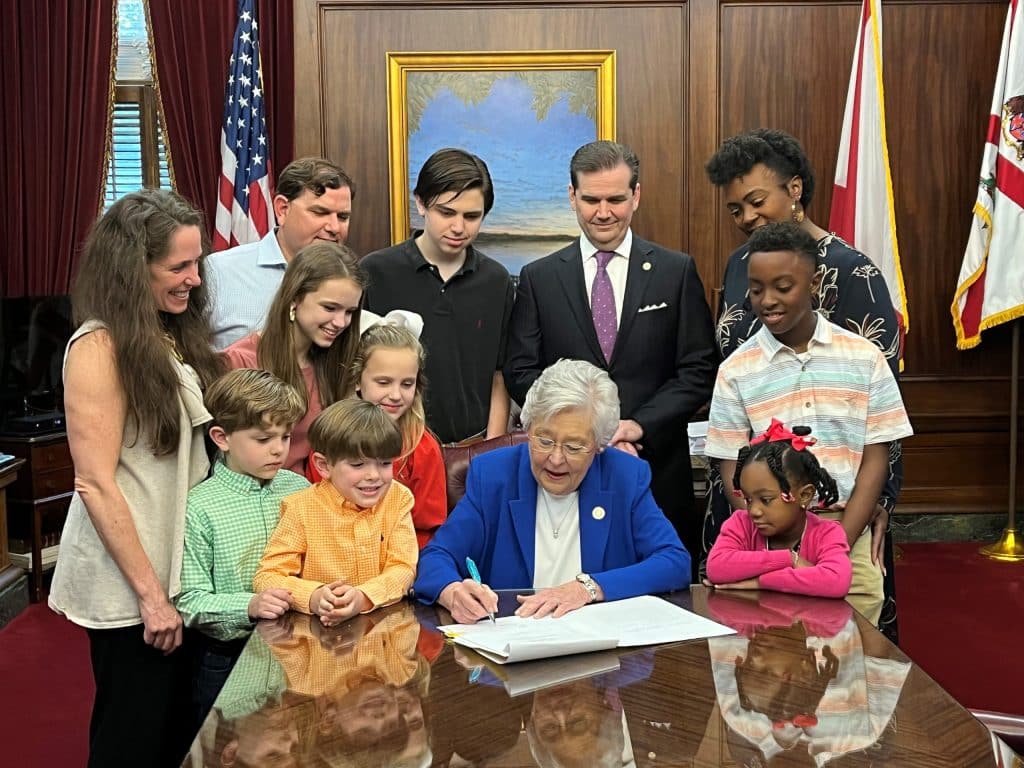
Photo Credit: https://governor.alabama.gov/
Alabama Child Care Tax Credit
In May 2024, Alabama enacted House Bill 358, introducing tax incentives aimed at enhancing access to affordable child care. The legislation, effective January 1, 2025, offers tax credits to employers providing child care benefits and to providers based on quality ratings and the number of subsidized children under six. The bill received bipartisan support, with sponsorship from Rep. Anthony Daniels and Sen. Garlan Gudger, and backing from Governor Kay Ivey. Organizations such as Manufacture Alabama, the Women’s Foundation of Alabama, the Business Council of Alabama, and the National Federation of Independent Business played significant roles in advocating for the bill, with VOICES for Alabama’s Children also supporting the initiative.
Alabama Child Care: Roadmap Project
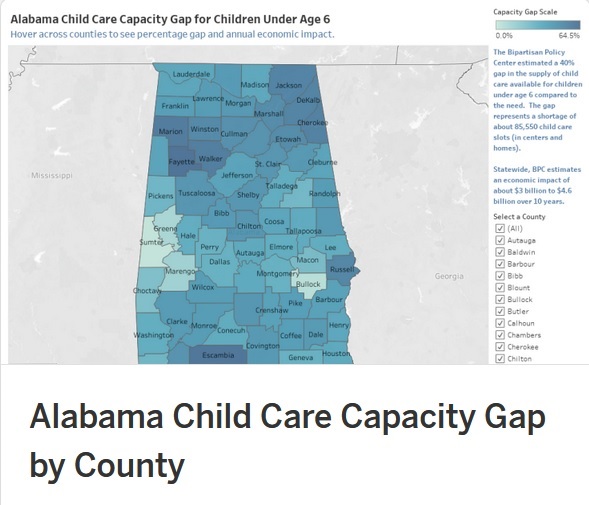
The Alabama Child Care Roadmap Project, is a collaborative effort by the Alabama Partnership for Children, the Alabama School Readiness Alliance, and VOICES for Alabama’s Children, designed to offer a comprehensive plan to enhance child care accessibility across the state. This initiative includes detailed mapping tools that allow users to explore the availability of licensed child care centers, family child care homes, and Head Start programs from both statewide to neighborhood views.
These maps are enriched with U.S. Census Bureau data, providing background layers that illustrate key demographic factors such as the percentage of children in working families, children living in poverty, and children in households where Spanish is spoken. This initiative helps its user by offering a nuanced understanding of child care needs and the resources available throughout Alabama.